


Managed vs self-managed Kubernetes is one of the first decisions teams face when adopting Kubernetes. You can either use a managed Kubernetes service from a cloud provider or run a self-managed cluster where your team owns installation, upgrades, and ongoing operations. The right choice depends on your team’s skills, the level of control you need, and how much operational work you can take on.
This guide breaks down managed vs self-managed Kubernetes, explains when each approach fits best, and helps you choose a deployment model that matches your goals.
Managed Kubernetes Services
Managed Kubernetes services reduce operational overhead by handling cluster provisioning and many day-to-day tasks for you. For many teams, managed vs self-managed Kubernetes comes down to whether you want to operate the control plane yourself or offload that responsibility to a provider.
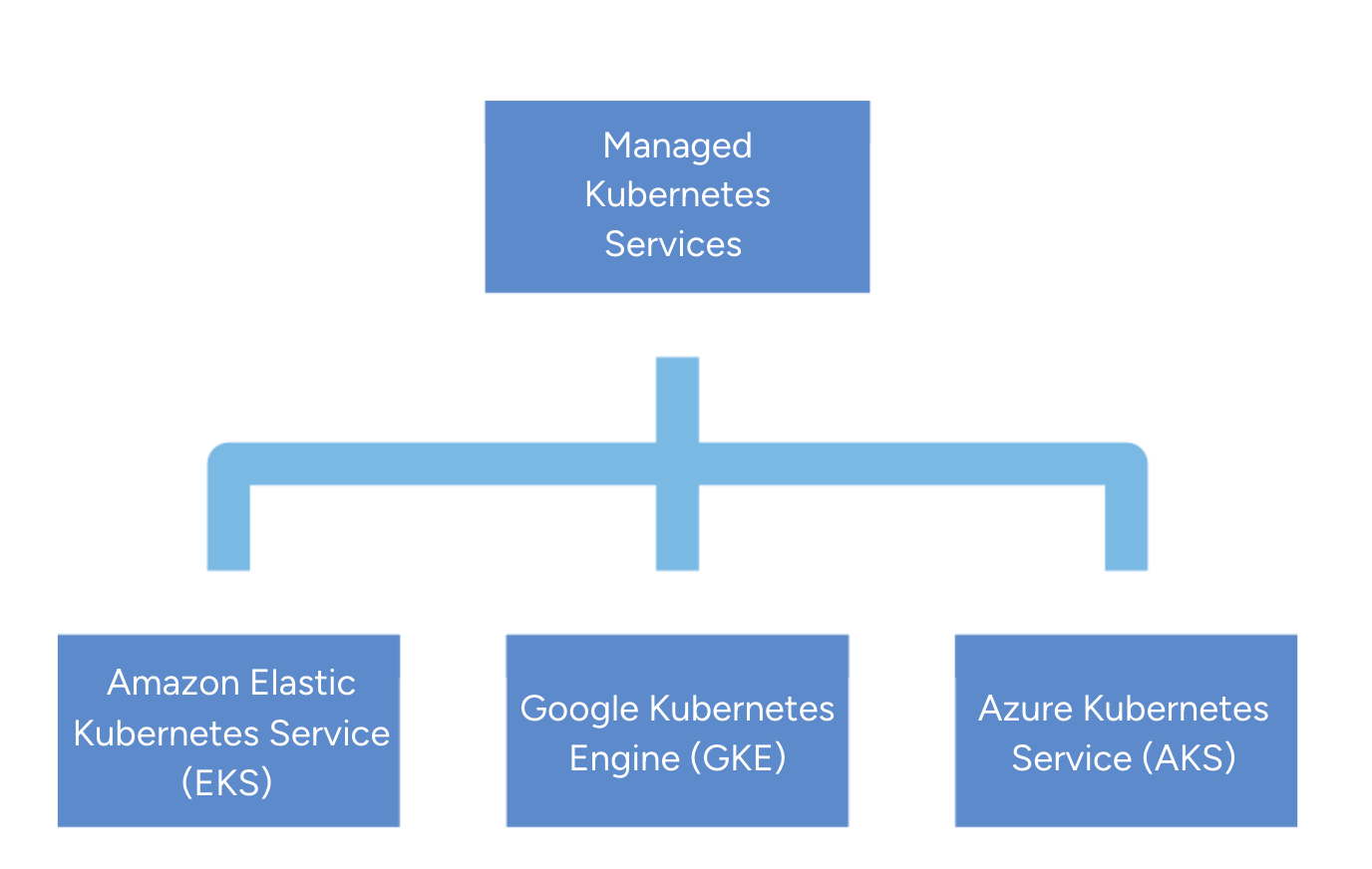
Key Benefits of Managed Kubernetes
1) Faster setup: Managed services provision clusters quickly so you can focus on applications rather than infrastructure.
2) Reduced operations: The provider typically handles upgrades, control-plane reliability, and many maintenance workflows.
3) Built-in reliability and security: Managed offerings are designed for high availability with strong defaults for security controls.
4) Easy scaling: Scale nodes and supporting services as demand changes, without heavy manual intervention.

When to Choose Managed Kubernetes
– You want to prioritize shipping applications over running infrastructure.
– Your team has limited Kubernetes operations experience or time for maintenance.
– You’re committed to a cloud ecosystem and want tight integrations with other services.
Self-Managed Kubernetes
A self-managed Kubernetes cluster gives you full control over installation, configuration, upgrades, networking, and security policies. The managed vs self-managed Kubernetes trade-off here is clear: you gain flexibility, but you also take on responsibility for uptime, upgrades, and operations.
Key Benefits of Self-Managed Kubernetes
1) Full control: Tune every layer of the stack, including networking, storage, ingress, and security policies.
2) Cost flexibility: Avoid managed-service premiums in certain environments, especially for development and testing.
3) Deeper Kubernetes expertise: Operating the cluster builds strong internal capability over time.
4) Custom architecture: Implement patterns and components your workloads require, without provider constraints.

When to Choose Self-Managed Kubernetes
– You need granular control for compliance, security, or operational standards.
– You run on-premises or hybrid infrastructure and need consistent configuration across environments.
– You have the expertise and capacity to handle upgrades, monitoring, backups, and incident response.
– You want maximum flexibility for experiments and cost-sensitive testing environments.
Bootstrapping Your Own Kubernetes Cluster
For teams choosing self-managed Kubernetes, bootstrapping with tools like kubeadm is a common approach. It gives you complete control over configuration choices, but it also increases the operations you must manage yourself.
Advantages of Bootstrapping
– Useful for low-cost development environments where you want to test microservices without managed-service overhead.
– Gives you flexibility to experiment with networking, storage, and cluster add-ons.
Bootstrapping does come with a learning curve and requires ongoing maintenance, so it’s best suited to teams comfortable operating Kubernetes.
Choosing the Right Option
To decide managed vs self-managed Kubernetes, evaluate these factors:
1) Expertise: If your team is new to Kubernetes operations, managed services reduce risk.
2) Cost: Managed services save time, but self-managed clusters can be economical in certain scenarios.
3) Control requirements: If you need fine-grained configuration, self-managed is often the better fit.
4) Scale and complexity: Large, customized deployments may justify self-managed operations and tooling.

Managed vs. Self-Managed Kubernetes: Comparison Table
| Factor | Managed Kubernetes | Self-Managed Kubernetes |
| Ease of Use | High | Lower |
| Cost | Higher | Lower (in some setups) |
| Customization | Limited | Extensive |
| Learning Opportunity | Limited | High |
Both approaches can work well. Managed Kubernetes is ideal if you want faster adoption with less operational burden. Self-managed Kubernetes is a better fit when you need deeper control, custom configuration, or on-prem/hybrid consistency. Understanding these trade-offs is the real answer to managed vs self-managed Kubernetes.
In our next blog, we’ll explore how to prepare AWS infrastructure for a Kubernetes deployment, including security groups and EC2 instances.
In our five-year journey, CoReCo Technologies has guided more than 60 global businesses across industries and scales. Our partnership extends beyond technical development to strategic consultation, helping clients either validate their market approach or pivot early – leading to successful funding rounds, revenue growth, and optimized resource allocation.
Ready to explore how these technologies could transform your business?